For the first time in a long time I found myself gravitating towards a stall of comic books, graphic novels and manga/anime. I used to be a major comic book freak. Mostly the super heroes, mostly Marvel, though I like Batman before Batman was cool and I had a thing for the Flash, though I really don't know why ... I pretty much learned to read through comic books. I can remember my brother Ed sitting down with me with an old Daredevil comic book (when he still had the yellow and black costume) and reading it to me while I looked at the pictures. I wrote about this here
When I was a kid I had a pretty advanced vocabulary and I credit that entirely to comic books. I remember doing a book report on Greek mythology and writing how Hercules was pretty much invulnerable .. this may have been grade four or five. My teacher clearly did not believe that I knew what the word meant so I explained it: "It means you can't hurt him .. like Superman"
I was still reading when the graphic novel phase began. I read the Dark Knight of course, and I remember a one off graphic novel called Empire, illustrated by Howard Chaykin and written by Samuel Delaney, one of my favorite science fiction writers .. or any other kind of writer.
One of the last comics I remember reading was Watchmen, but I only read a couple of issues before it finished its run. Which brings us to Word on the Street. The booth I went to had all of the issues of Watchman in a single book form; I've heard rumours of a movie being made and I always wanted to finish reading it, so I bought it.
There were also a lot of manga/anime books at the booth. This is not a world with which I am overly familiar. I've seen Akira and Be-Bop Cowboy and bits of pieces of other anime on TV. But I can't say I am overly familiar with this art form, though I've always liked the look. My friend Elizabeth however is a total anime goddess and often features beautiful artwork on her blog. There were a few books of assorted manga art so Collette and I decided to pick her up a couple .. one of them I liked so much I bought myself a copy.
 A winged girl with a sword, armour .. and a skirt ... what's not to love? Well, maybe the only thing lovelier is this girl in her kimono
 When I sent the books to Elizabeth I made notes on some of the pictures that I particularly liked. I was looking at the images as works of art, and making comments like "I like the way he does the hair and makes it look like it is alive" or commenting on the use of shadows and light. Beth contends that this is because I work in the video business; as a novelist, she looked at the same images and created little stories for each one. I did the same thing .. except I wanted to put all the pictures together and make a storyboard with them.
Beth calls herself a storyteller (which she certainly is) but I too can wear that mantle. I have always been a writer .. poetry, fiction, plays .. I used to write voraciously. For a big part of my life that is probably the one thing that people knew about me ... "oh, that's Victor, he writes" When I got into the video business, the "creative" writing tapered off (I still write scripts for a living) largely because I found a new outlet for my storytelling.
I consider editing to be the true storytelling aspect of the video creation process. Whether or not the script is mine, regardless of who shot or produced the video, it is in the editing that the story is put together. Videos and movies are shot out of sequence, of course, if you have five scenes in one locale they are all shot at the same time, regardless of the time line .. so Scene one, scene six, scene twelve, separated in the story by years perhaps, are all shot on the same day. Later, in my editing computer, they are put in their proper sequence. Then, adding elements like music .. so important to video, I look as music, even background music, as a kind of wordless narration or even another character ... and colorizing and titles ... all of this helps to tell the story. So yes, I'm still a storyteller.
Which brings us to Watchmen. This is a great book, period, comic or not. I won't go into a review of the story but you should really read this thing ... it will totally change your opinion about superhero books. It is a very literate graphic novel, not only does it involve lots of dialogue, the story is relatively complex, with lots of characters, flashbacks, parallel story lines, philosophy, psychology, etc. It references popular culture, ancient cultures, politics, science, religion .. it really is a novel. But it also really is graphic.
 Reading the book again, I could see why they want to make it into a movie. Dave Gibbons frames his panels like a movie ... extreme tight close ups, so tight they don't even make sense then, through three or four panels, he pulls back to reveal the entire scene. It is really quite breathtaking. Sometimes these panels are accompanied by script, sometimes they are just images and I found that to be extremely effective.
If I was to make a "movie" whenever I start blocking one out in my mind, it is the images I deal with first. When I did my student movies, years ago, I started with scripts ... long, dialogue heavy, description-rich scripts. I was still into my writing stage then, it was quite common for me to blast off a hundred page science fiction story in a couple of days. So when thinking "movie" I thought word first. Making those movie taught me a lot, of course, but even later when I created a couple of "fictional" short films, I started the creation process with scripts, written words; when I envisioned a scene, I did it in terms of describing it like a passage from a novel: "The scene begins outside, in a park at night with autumn leaves laying on the ground, almost seeming to glow in the crepuscular light ..." In my mind, I could see the scene perfectly, but I was still conceiving it in literary terms.
Working as an editor for so many years has changed that. Yes, I consider myself a storyteller. Yes, I still enjoy writing, that desire to write is pretty much why this blog exists. But when working in a visual medium ... I think visually. (wow, I am just a genius of the obvious, aren't I?)
Now, when I think about creating a movie, I think of the imagery first. Instead of a script, a page filled with words, I would rather do a storyboard, with actual images to block the scene out. In my editing software, I have a timeline where I take video clips and drop them down into this workspace, connecting one clip to the other, to create a linear sequence. The clips can have audio attached, can have dialogue and obviously that it a way I build the timeline, but I like the idea of moving the clips around like little pictures. Whereas Elizabeth looked at the pictures in the anime book and perhaps wrote a story in her head for each page, I wanted to put all the pages together, lay them out like images in my timeline, and create the story that way.
One of my favorite movies is Rio Bravo, a western by Howard Hawks starring John Wayne and Dean Martin and Claude Akins.
 One of the things I love about this movie is the opening scene. In it we are introduced to Akins, the town bully. We meet Martin, a man who was once a dapper lawman and who is now the town drunk. We meet Wayne, the current sheriff and Martin's former friend. In the saloon where Akins is drinking with his buddies, Martin debases himself by begging for money to get booze; Akins makes him retrieve a coin from a used spittoon. Martin, a once proud capable man allows himself to be abused in order to get his drink. As if inspired by the drunk's subservience, Akin kills a man "just to watch him die" (OK I felt a need for a little Johnny Cash reference). In comes Wayne and he lays Akins out with his carbine and drags him to jail; before he leaves, Wayne addresses his old friend Martin, expressing his disgust and sadness about what he has become ...
What makes all of this truly interesting is the fact that there is no ... or little ... dialogue in this scene. It is several minutes long and without any words we learn so much: Akins is a bully because he is a man of power and position and the town allows him to be cruel, Martin has fallen a long long way and sees no way to pull himself up,l Wayne wants to help his friend but his cowboy code restricts him in how he can do that .... all without words. Is the very first scene in the movie and with out any dialogue at all, Hawks efficiently sets up the rest of the story to come. Hawks began his movie making career in the silent era so it is really not surprising that he could stage the scene in this way to such great effect.
Dialogue still has its place in movies. One of my favorite movie makers of recent time is writer/director David Mamet. A former playwright, his movies are some of the most plot based, dialogue driven movies you will ever see. House of Games, Things Change, Homicide, The Heist, The Spanish Prisoner ... all great movies, heavily plotted and filled with some of them most dizzying and intricate dialogue you have ever heard. Mamet's movies work due to his tight plotting and relying on fine actors like Joe Mantegna, Gene Hackman and Steve Martin. Not options generally available to us amateur film makers.
The Nuit Blanche exhibits showed me that art takes a lot of forms and sometimes those forms .. be they sculpture or words or video or big plastic things hung in the ceiling of the Eaton Centre .. define the art. I don't really see that with the video. I may storyboard a scene instead of creating in the word processor but I am still telling a story, it is just a different way to view it. When I looked at the pictures in the anime books I saw the stories, I wondered who these characters were and what they were doing and that is a testament to the skill of the artist ... even with a single panel, he was able to convey a sense of time, place, personality ... so he is a storyteller too.


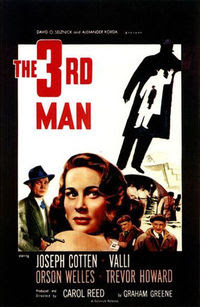
 I certainly don't aspire to such artistry but I think I understand that power of music to inform image. I have a certain reputation for it in my field. I have worked with other editors on long, complex corporate videos; usually in such cases where the bulk of the video is highly expository, there is a desire to break up the talking heads and close up shots of steel presses with musical montages. These little scenes provide a reprise from the pure information but they still must have a purpose, they still must illustrate something about the product or company. Often, working on these kinds of videos the refrain was "let Kellar do the freaking montage".


